One-Off Cut vs Signing Up for a Recurring Plan
After a rescue cut, is a recurring plan worth it? Compare cost over time, overgrowth prevention, and convenience for your PJ home.
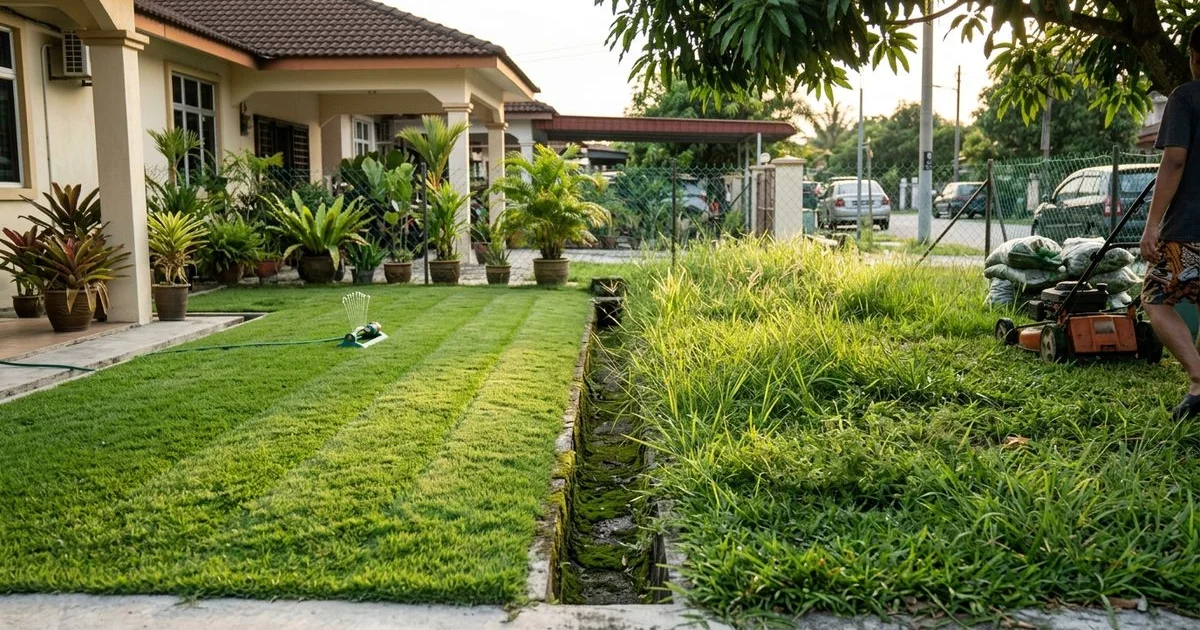
After the One-Off, What Next?
The most practical next step is choosing a set schedule if you value a consistently neat garden, or sticking to single visits if you prefer to minimise yearly appointments. You have just received a one-off rescue cut on a yard that had gone overgrown, and the results speak for themselves. Our team at GrassCutting.my, started by Roashan in 2018 to serve Petaling Jaya and Damansara, hears this follow-up question constantly when clients compare one off vs recurring grass cutting.
Homeowners generally consider two distinct paths for their property:
- Waiting for the grass to look bad before booking another single cut.
- Setting up a recurring plan to lock in the current tidy appearance.
From our daily operations, we see that the best choice depends on your specific grass species and your personal tolerance for a messy yard.
This guide compares the actual long-term costs, explains what your turf needs in our heavy rainfall climate, and helps you pick the smartest option.
The Cost Argument: One Off vs Recurring Grass Cutting
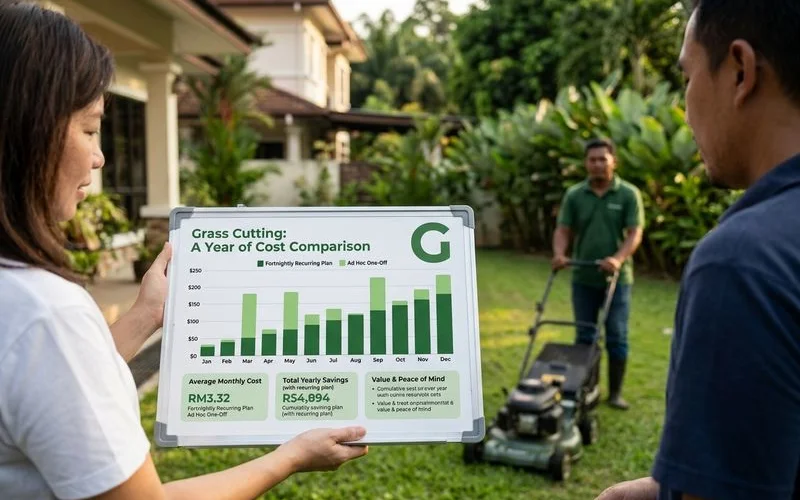
A regular plan often costs almost the same as sporadic one-off cuts over a 12-month period because overgrown yards incur heavy rescue surcharges. When weighing a lawn plan vs single cut, the financial gap is much smaller than most property owners expect.
For a typical landed residential compound in PJ, whether it is a terrace house or a bungalow, the pricing structure changes based on grass height — and knowing when an overgrown lawn needs a one-off cut helps you avoid the steepest rates. A rescue cut for a yard left untouched for two or three months requires industrial brush cutters, heavy bagging, and extra labour. These sessions often cost double the rate of a standard maintenance visit.
We track these yearly expenses closely across hundreds of local properties. Here is the rough year-long financial picture:
| Approach | Visits per Year | Typical Outcome |
|---|---|---|
| Fortnightly recurring plan | 24-26 | Lawn looks tidy all year, predictable monthly cost |
| ”I’ll book when bad” one-offs | 3-5 | Lawn cycles between clean cuts and heavy overgrowth |
| Recurring + occasional spray | 24+ | Tidy lawn + active weed control, highest standard |
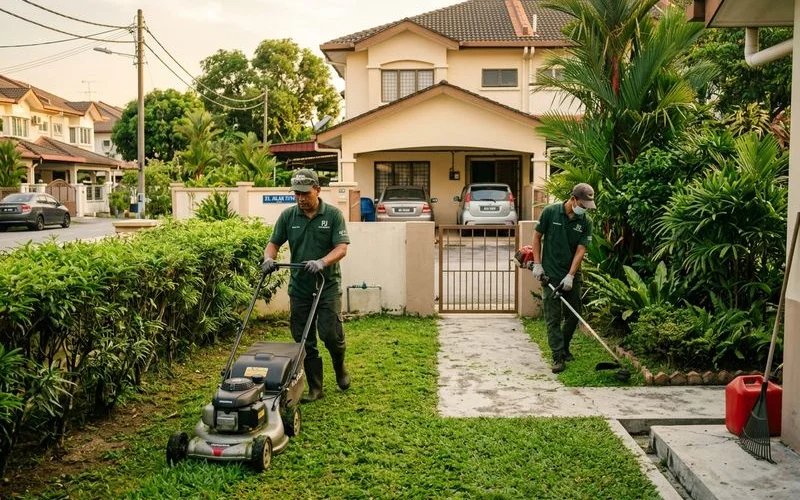
The recurring plan becomes the clear financial winner for residents who typically book regular one-offs every four to six weeks anyway. Paying normal ad-hoc rates that frequently will quickly exceed the discounted rate offered by a 24-visit contract.
Many homeowners fall into the trap of delaying their booking just to save a few Ringgit. Our crews frequently see this strategy backfire when the grass reaches rescue-cut height, which triggers the heavy overgrowth surcharge.
How Grass Type Affects Your Budget
Your specific turf variety heavily influences these annual costs. Cow grass (Axonopus compressus) dominates many older Petaling Jaya properties because it is highly resilient. It grows slightly slower vertically, meaning you might stretch a cut to three weeks, but waiting longer guarantees a thick, tough overgrowth that demands a costly rescue service.
Philippine carpet grass (Zoysia matrella) requires a completely different financial approach. This premium turf forms a dense, beautiful mat that needs trimming every ten to fourteen days. If you let Zoysia overgrow and then ask us to cut it short, the lawn will develop ugly brown patches that require expensive fertilisation to fix.
The Convenience Argument
A recurring schedule completely removes the mental load of monitoring your yard and hunting for an available contractor. If you are asking yourself is recurring grass cutting worth it, the primary value is never having to worry about your lawn quietly going overgrown while you are busy with work or family.
On a locked schedule, the logistics happen automatically. The crew shows up on the agreed day, completes the trimming, clears the cuttings, and leaves the compound spotless. You skip the entire frustrating cycle of noticing the tall grass, making a mental note to call someone, and waiting days for an open slot.
We notice that ad-hoc bookings work fine for people who genuinely do not mind looking at a messy yard for a few weeks. The system breaks down entirely for homeowners who value a pristine exterior but simply forget to make the appointment on time.
Booking one-off cuts creates a series of hidden inconveniences:
- Scheduling delays: Finding a crew during the peak rainy season often means waiting up to a week.
- Inconsistent quality: Using different ad-hoc contractors leads to uneven cuts and varying cleanup standards.
- Property presentation: Your home spends half the year looking neglected before each rescue cut.
- Pest issues: Overgrown sections quickly become breeding grounds for mosquitoes.
This constant cycle of neglect and rescue creates unnecessary stress. A fortnightly plan guarantees your property always looks its best, matching the standard of well-maintained Damansara neighbourhoods.
The Lawn Health Argument
Frequent, scheduled mowing produces a dense, healthy lawn that naturally suffocates aggressive weeds. Yards that constantly cycle between extreme overgrowth and severe scalping suffer from root shock and poor soil health.
A consistently maintained yard receives cuts at the correct height, regular edging, and immediate clearing of wet cuttings. This steady rhythm encourages the grass roots to spread horizontally, creating a thick carpet that blocks sunlight from reaching weed seeds in the soil.
Our maintenance teams see a massive difference in weed populations between ad-hoc yards and scheduled yards. Dense lawns naturally crowd out invasive species, which heavily reduces your need for chemical spraying interventions over time.
The Danger of the “Chop and Shock” Cycle
Letting the turf grow wild for two months and then aggressively cutting it down to the dirt damages the plant. This drastic reduction removes the majority of the grass blade, crippling the plant’s ability to photosynthesise and recover.
When grass enters a state of shock, the root system weakens. This creates the perfect opening for hardy tropical weeds to take over your compound.
You can avoid this completely by maintaining a regular trim. The table below highlights the biological differences between the two approaches:
| Lawn Health Factor | Ad-Hoc Rescue Cuts | Fortnightly Recurring Plan |
|---|---|---|
| Root Density | Weak, shallow roots due to shock | Deep, horizontal root spread |
| Weed Resistance | Low, bare soil invites fast weed growth | High, dense grass chokes out weeds |
| Recovery Time | Slow, grass turns brown for weeks | Instant, lawn stays vibrant green |
| Soil Moisture | Dries out quickly after severe scalping | Retains moisture under healthy blades |
For the majority of property owners in Petaling Jaya, this final decision prioritises convenience and peace of mind over a few saved Ringgit.
If you want the exterior handled professionally without giving it a second thought, the recurring plan is the obvious move.
If you genuinely prefer the ad-hoc cycle and do not mind the occasional jungle phase, booking single visits works perfectly fine.
Your Next Steps
We will happily quote both options for your specific compound so you can make an informed choice.
Send us a message today with a photo of your yard, and let us get your property looking perfect.
Frequently Asked Questions
Is a one-off cut more expensive long term?
If you book one-offs as often as the lawn actually needs them — which most people don't — they cost roughly the same. If you wait for overgrown rescue cuts, the rescue-rate surcharge makes them more expensive than a plan.
Can I trial a plan?
Yes. Start with a single cut and continue on a recurring schedule if it suits you. No long-term commitment required.
What's the typical switch trigger?
Most one-off customers ask about plans after seeing how easy it is to maintain a clean lawn. The trigger is usually the cost of the second rescue cut making the plan look like the obvious move.