Why Overgrown Grass Invites Snakes and Mosquitoes
Tall grass and lalang harbour snakes and breed Aedes mosquitoes. Learn why short grass reduces pest risk, especially in the wet season.

Our team understands the direct link between overgrown grass, snakes, and mosquitoes in Petaling Jaya. Tropical weather accelerates lawn growth rapidly, which is why reliable grass cutting in Petaling Jaya is the simplest defence against pests. This overgrowth transforms your backyard into an ideal habitat for dangerous reptiles and dengue vectors.
We tackle these extreme cases daily with our vacant land service.
Residential lawns face identical risks if ignored for just a few weeks. Here is a breakdown of the facts and the exact steps to clear the danger.
What Are The Two Pests Overgrowth Brings?
Our technicians encounter snakes and Aedes mosquitoes as the two primary pest problems in overgrown lawns. Tall grass provides the perfect cover for reptiles. Damp leaf litter creates ideal breeding pools for dengue vectors.
We see these exact issues constantly across Petaling Jaya and the broader Klang Valley. Regular grass cutting remains the single biggest factor under your control to stop these infestations. The local Majlis Bandaraya Petaling Jaya council can even issue fines for overgrown residential and vacant land because of these severe health risks.
Our clients often ask how fast these pests move into a neglected yard. The table below outlines the primary attractions and risks for each pest. Both of these intruders treat tall grass as a permanent habitat rather than a temporary stop.
| Pest Type | Primary Attraction to Overgrowth | Specific Risk to Homeowners |
|---|---|---|
| Common Snakes | Dense cover for hunting and shade | Dangerous encounters in the garden |
| Aedes Mosquitoes | Trapped moisture and shaded leaf litter | Dengue fever transmission |
Why Do Snakes Hide in Tall Grass?

Our crews frequently spot common Malaysian snakes using tall grass for shelter from the afternoon heat. This thick vegetation also offers excellent cover while hunting rodents. The species most often reported in local residential compounds include dog-faced water snakes, common rat snakes, and sometimes cobras.
We know that these reptiles do not actually want to be in your compound. They simply stay because the dense grass lets them move without being noticed. According to recent data from the Civil Defence Force, Selangor records thousands of snake capture cases annually in residential areas due to high population density.
Our routine maintenance includes clearing the edges to eliminate this lalang snake risk completely. Once the grass is cut back, the protective cover disappears. Snakes then move on to overgrown lots and undeveloped land nearby.
The boundary lalang problem
We see many PJ snake encounters coming from lalang growing along boundary fences. Selective spraying or regular trimming of that boundary strip handles the issue. These neglected boundary spots act as reservoirs for the local reptile population.
Our observation is that keeping the grass short forces them to seek shelter elsewhere. Neighbourhoods with even a few overgrown lots have noticeably higher snake-encounter rates. Regular cutting breaks this cycle.
How Do Mosquitoes Use Standing Water?
Our yard clearing process removes the trapped moisture where Aedes mosquitoes lay their eggs. These dengue vectors multiply rapidly in tiny pockets of standing water hidden deep within the grass. While overgrown lawns do not create water on their own, they block sunlight and stop evaporation.
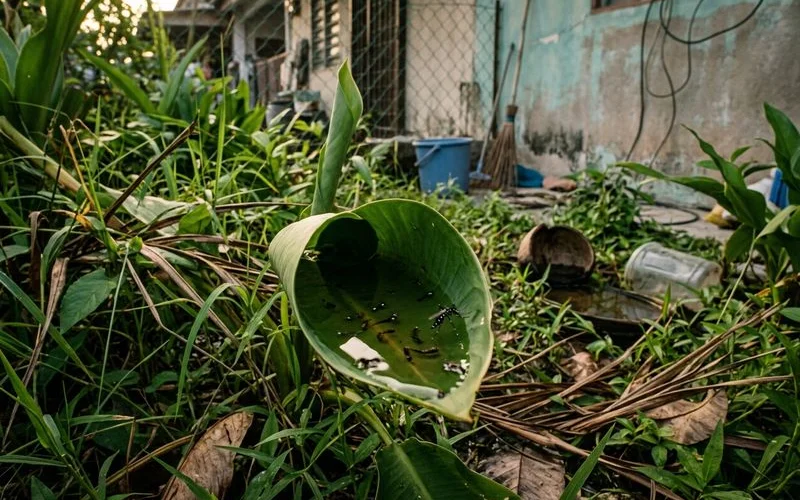
We always clear away the trapped leaf litter during an aedes mosquito breeding lawn cleanup. The mosquito life cycle only takes about seven to ten days from egg to biting adult. Wet leaves trapped after a rainstorm provide the perfect nursery for these larvae.
Our team recommends checking specific areas around the house to reduce mosquito pressure. Combine regular lawn care with a quick inspection of common water traps. These hidden spots include several prime breeding grounds.
- Potted plant saucers holding excess rainwater
- Blocked roof gutters filled with decaying leaves
- Discarded containers hidden under tall grass
- Uneven ground depressions where puddles persist
We know that a tidy compound noticeably reduces the mosquito population. The 2025 statistics for Selangor showed over 23,000 dengue cases, highlighting the need for serious prevention. Removing the shaded micro-habitat is an immediate, actionable defense against this disease.
What Does Regular Cutting Buy You?
Our fortnightly cutting schedule is the most reliable way to keep pest pressures low in a residential PJ compound. A consistent routine ensures the lawn stays under eight centimetres — see how often you should cut grass in Malaysia for the timing behind this. Edges remain tidy, leaf litter does not accumulate, and standing water dissipates quickly.
Our service ensures your property reads as well-kept to the neighbours. This appearance matters greatly in dense neighbourhoods where one overgrown property pushes pests onto adjacent houses. Local municipalities take this seriously, and property owners can face fines for neglecting their land.
We suggest comparing a scheduled plan against reactive cutting. A recurring schedule prevents the shelter problem from building up. Look at the difference in protection levels.
| Maintenance Strategy | Grass Length | Pest Habitat Risk |
|---|---|---|
| Fortnightly Schedule | Maintained under 8 cm | Very low |
| Reactive Cutting | Varies wildly | High risk of snake cover |
| Neglected Lawn | Overgrown lalang | Active breeding ground |
Our recurring plan setup is the simplest way to establish this healthy rhythm.
The equipment arrives on time, the cuttings are cleared, and the yard stays safe. Consistent maintenance removes the worry of hidden dangers in the grass.
Frequently Asked Questions
Does cutting grass keep snakes away?
Short grass removes the cover snakes use for shelter and hunting, making your compound much less attractive to them. It doesn't eliminate the risk entirely, but it's the single biggest factor under your control.
Can overgrown grass cause dengue?
Indirectly, yes. Overgrowth traps standing water and creates shaded leaf-litter pockets where Aedes mosquitoes breed. Keeping grass short and clearing debris reduces breeding sites near your home.
How short is short enough?
For most PJ lawns, keeping cow grass and carpet grass under 8 cm is enough to remove the shelter that snakes use. Fortnightly cutting in the growing season maintains this comfortably.