The Right Cutting Height for Malaysian Grass
Cutting at the right height prevents scalping and keeps lawns healthy. Learn ideal heights per Malaysian grass type and why it matters.
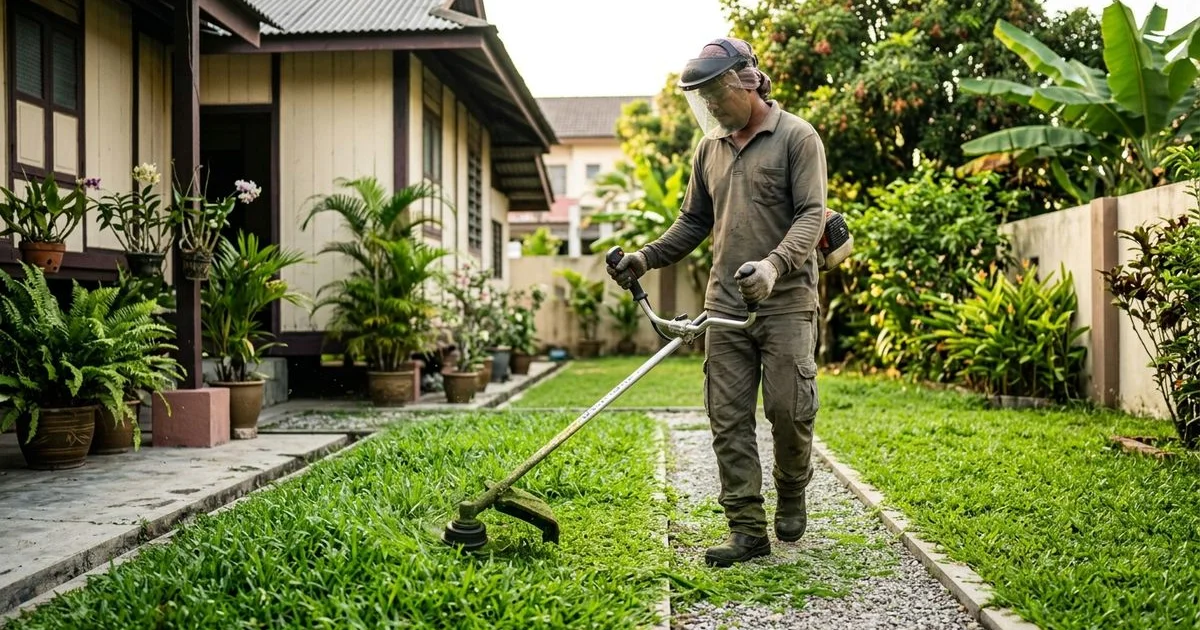
You know how a freshly cut lawn can sometimes turn yellow and patchy within a few days? That sudden decline usually happens because the blade was set too low for the local climate.
Nailing the proper grass cutting height malaysia demands is the secret to a resilient garden.
We started GrassCutting.my back in 2018 to help homeowners in PJ and Damansara avoid this exact issue. Let’s look at the data behind proper mowing heights and explore a few practical ways to protect your turf.
Why Cutting Height Matters
Cutting at the right height is the single biggest factor in a healthy Malaysian lawn after cutting frequency. Scalping the turf by cutting too short strips the plant of its ability to photosynthesise. We see this mistake constantly across Petaling Jaya properties.
Setting the blade too low triggers three immediate problems:
- Soil Exposure: Bare patches quickly go yellow as the dirt dries out in the afternoon sun.
- Weed Invasions: Common broadleaf invaders like Asystasia gangetica (Chinese violet) quickly establish in empty gaps.
- Moisture Loss: The lack of a leaf canopy accelerates water evaporation from the roots.
Our team adjusts the blade setting to the exact species in your garden to prevent this damage. Leaving the turf too tall creates a different problem by trapping excess moisture near the base. Our recurring plan automatically calibrates the machinery per visit based on the season. The crew brings the equipment set for the specific task, so you do not have to worry about the details.
Heights by Grass Type
We use specific benchmarks for the most common turf varieties found in local gardens. Fast-growing species like Axonopus compressus (cow grass) require a slightly taller deck to stay green. You will severely stress the plant if you try to trim it down to a golf-course finish. Our crews strictly follow the baseline measurements below to guarantee optimal root health.
| Grass Type | Dry-Season Height | Wet-Season Height |
|---|---|---|
| Cow grass | ~5 cm | ~6-7 cm |
| Philippine carpet grass | ~4 cm | ~5 cm |
| Carpet grass | ~4 cm | ~5-6 cm |
| Pearl grass | ~3 cm | ~4 cm |
The Malaysian grass types guide covers how to tell them apart if you are unsure what you have. We always confirm the species on a new property before adjusting the trimmer line. Taking a moment to identify the turf prevents irreversible scalping damage, especially since the carpet grass cutting height differs significantly from coarse varieties.
The “Thirds” Rule
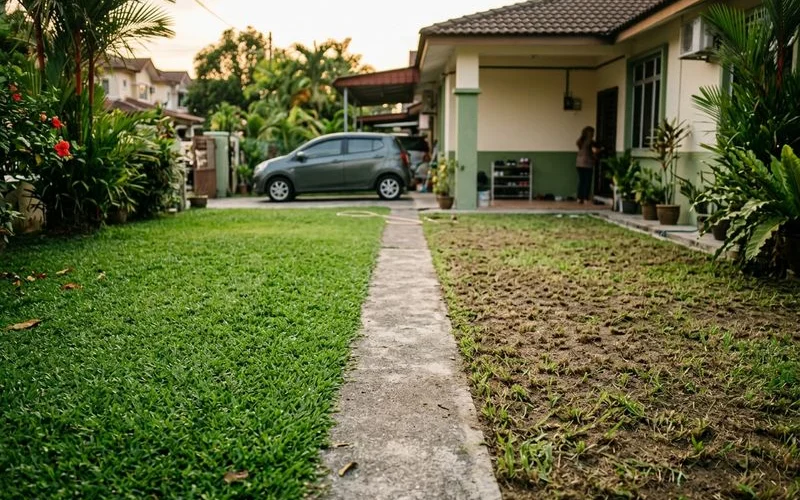
We strictly adhere to the one-third rule on every single job. This core horticultural principle states you should never remove more than 33% of the leaf blade in a single session. Stripping away too much tissue starves the root system because the plant must redirect all its energy into emergency leaf recovery.
If a cow grass lawn has surged to 9 cm, chopping it down to the ideal mowing height cow grass prefers (around 4 cm) in one pass will shock the root system. A much safer method involves trimming it to 6 cm first, then returning a week later to hit the final 4 cm target. We find this staggered technique keeps the garden looking green and healthy.
This biological limit explains why fortnightly service heavily outperforms monthly catch-up sessions, as our weekly vs fortnightly vs monthly cutting comparison sets out. Grass grows rapidly in Malaysia’s constant 24-32°C heat. Our fortnightly schedule ensures the blade growth remains moderate and manageable. Waiting a full month forces a difficult choice between dangerous scalping or performing two separate passes.
Why Breaking the Rule Ruins Lawns
Ignoring the one-third limit triggers a cascade of landscape problems. We constantly have to rehabilitate gardens suffering from these exact symptoms.
- Root Starvation: The plant abandons root development to focus entirely on replacing lost leaves.
- Weed Invasion: Bare soil patches provide perfect germination zones for aggressive seeds.
- Sunburn Vulnerability: Removing the protective canopy exposes the sensitive base to harsh afternoon heat.
Seasonal Height Adjustment
We intentionally cut slightly taller during the monsoon stretches between September and February. Leaving an extra 1 to 2 cm of leaf tissue shades the soil and reduces the severe fungal pressure amplified by constant rain. Wet, muddy soil also compresses heavily under the weight of machinery or foot traffic. Our operators know that pushing a heavy mower over saturated ground will cause the wheels to sink. This sinking effect forces the blade lower than intended, producing ugly scalped patches across the yard.
“Raising the mower deck by just a centimeter during the wet season is the easiest way to prevent tire ruts and fungal rot on residential lawns.”
The strategy shifts entirely once the rain stops. We drop the blade back to the standard baseline for your specific grass type during the drier months. A shorter cut looks significantly tidier and sharper around garden bed edges. Our maintenance strategy succeeds because the dry conditions eliminate the high fungal disease risk we were hedging against earlier in the year.
How We Set Height in Practice
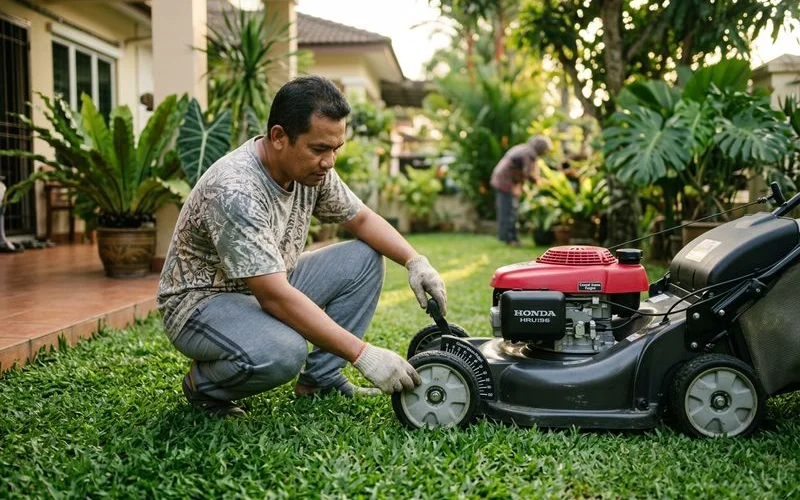
We execute these exact height adjustments using specialised techniques for different tools. Operating a heavy-duty brush cutter, like a commercial STIHL or Mitsubishi unit, requires precise physical coordination. The final grass height is dictated entirely by the operator’s stance, harness position, and blade angle. Our experienced crews calibrate their posture against the grass type and the visual finish from the previous visit.
String trimmers require a completely different approach. We control the clearance on these tools by adjusting the nylon line length before tackling a new section. A longer line creates a wider, flatter cutting disc that hovers easily above uneven terrain.
There is no single magic number that perfectly fits every property in PJ. The correct answer always depends on several variable factors:
- The specific grass species planted in the yard.
- The current weather cycle and recent rainfall.
- The lawn’s recent maintenance and fertilisation history.
We deliver this exact precision through a consistent service schedule. Having the same crew inspect your lawn every single visit ensures the equipment is always adjusted perfectly.
Secure Your Lawn’s Health
Securing a lush, resilient garden starts with the blade of your mower. You can prevent yellow patches and weed invasions by simply matching your cut to the grass species and the current weather.
We handle these exact calculations for dozens of homeowners every week.
Reach out to set up a consistent maintenance schedule that takes the guesswork out of yard care.
Frequently Asked Questions
How short should I cut my grass?
Not too short. Scalping stresses tropical grass and leaves patchy yellow zones. Cut to a healthy height per grass type — taller in the wet season, slightly shorter in the dry.
Why does my lawn look patchy after cutting?
Usually scalping or uneven cutting. Correct height and technique fix both — and avoiding rescue cuts on overgrown lawns avoids the underlying cause.
Does cutting height affect weed growth?
Yes. Cutting too short opens up bare spots where weeds establish. Cutting at the correct height keeps the lawn dense enough to crowd weeds out.