Common Lawn Weeds in Malaysia and How to Control Them
Identify the broadleaf and grassy weeds common in Selangor lawns and the right control method for each, plus prevention tips.
Two Main Categories
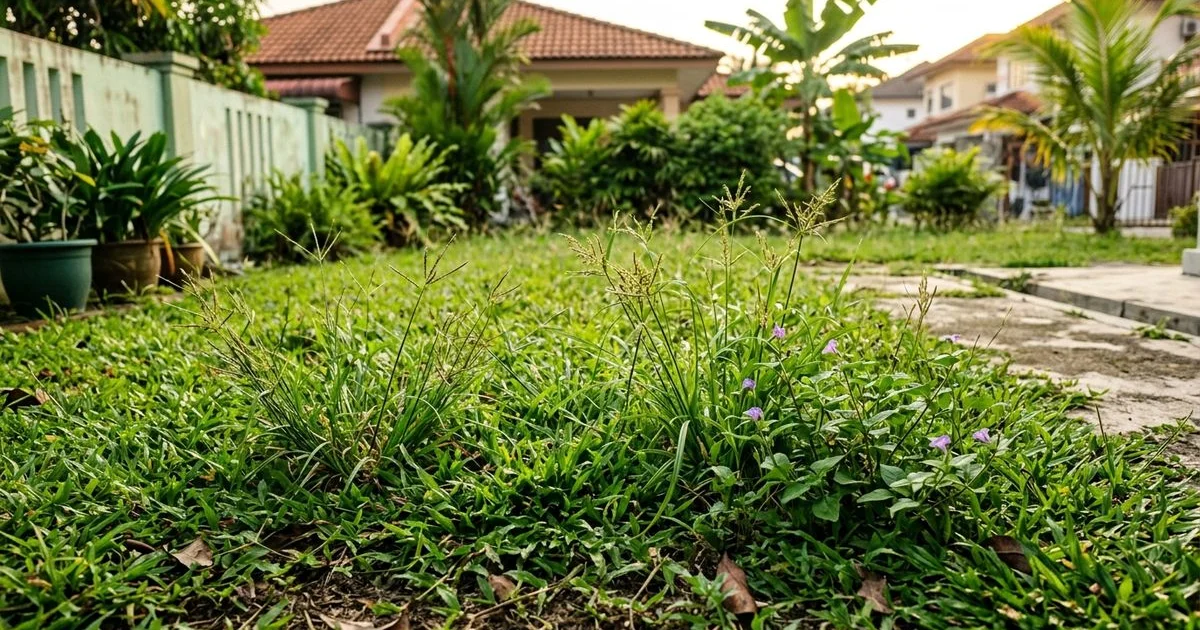
We founded GrassCutting.my in 2018, and our years of treating Petaling Jaya lawns prove that misidentifying invasive plants ruins perfectly good turf. For common lawn weeds in Malaysia, most fall into two broad categories: broadleaf weeds and grassy weeds.
This distinction dictates your entire treatment plan because selective herbicides are formulated to target only one specific type. Our weed control service handles precise plant identification during a site assessment to choose the safest, most effective formulation.
Most residential lawns in Damansara have a mix of both types fighting for space.
Their dominance shifts constantly based on your soil compaction, sun exposure, and the seeds blowing over from nearby properties.
Common Broadleaf Weeds
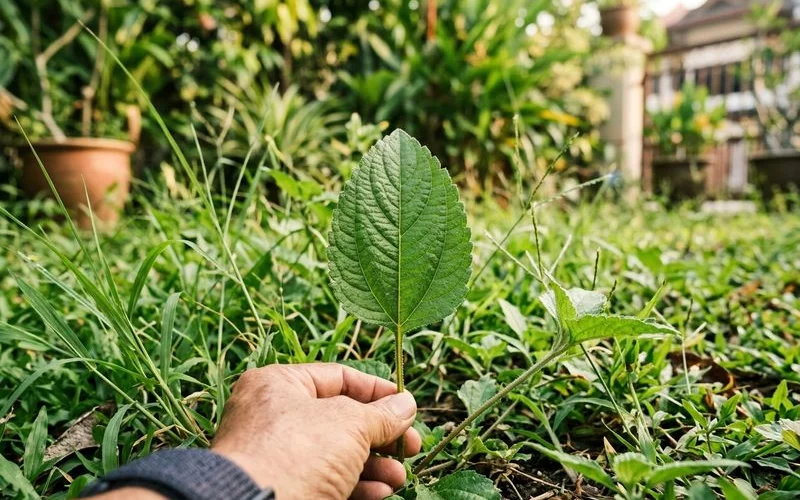
We regularly treat Selangor properties where these leafy pests have completely taken over the turf. Broadleaf weeds are highly visible invaders because they feature wide, flat leaves that contrast sharply with narrow grass blades.
You will often spot them by their distinct heart-shaped, oval, or lobed foliage. Our technicians rely on targeted herbicides containing MCPA or 2,4-D to eliminate these plants without harming your primary grass.
A quick response is vital because varieties like dollarweed can expand their footprint rapidly during the wet monsoon months. The most common offenders in our region include specific, fast-spreading varieties.
- We frequently encounter dollarweed, which spreads aggressively in moist areas with its round, coin-shaped leaves.
- Common clover-like species feature three-leaf or four-leaf clusters and love disturbed soil.
- Creeping daisy, also known as wedelia, produces yellow flowers and quickly overtakes unmaintained edges.
- Our team also removes spurges, which are small ground-hugging plants that secrete a toxic milky sap when broken.
- Plantain, locally called daun pelanduk, forms a low rosette of broad ribbed leaves.
These common pests respond exceptionally well to standard broadleaf-selective sprays. We usually see one application clear out the main flush within just a few days.
A carefully timed follow-up spray handles any stubborn survivors or newly sprouted seedlings. The preserved image below shows what to look for during your own yard inspection.
Common Grassy Weeds
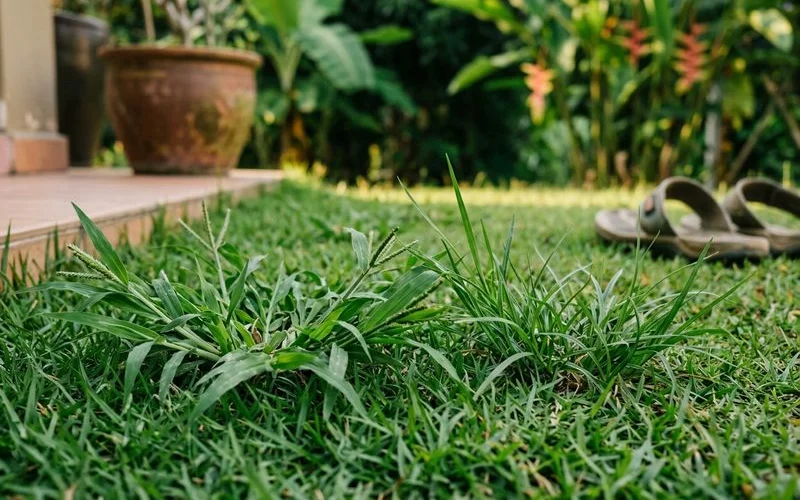
We find that grassy weeds are particularly tricky because they look almost identical to your actual lawn at a quick glance. These narrow blades share a similar growth habit with standard turf, making them difficult to spot early.
By the time most homeowners notice them, they have firmly established themselves alongside the grass and cannot be pulled easily. Our ongoing maintenance schedules target the main offenders found across Petaling Jaya.
- Lalang (Imperata cylindrica) is the absolute worst offender, featuring tall feathery seed heads and an extensive rhizome network.
- Crabgrass creates flatter, spreading clumps with heavily branched stems that choke out healthy roots.
- We also battle goosegrass, which forms flat spreading rosettes that are incredibly tough to pull by hand.
- Nutsedge stands out with its distinct triangular stems and a noticeably faster growth rate than typical lawn varieties.
Lalang requires an aggressive approach because its invasive roots can reach up to 1.2 metres deep into sandy Malaysian soils. Our permanent lalang control guide covers the systemic-spraying approach using glyphosate in much greater detail.
Crabgrass and goosegrass respond effectively to a targeted application of specific grass-selective herbicides. Nutsedge needs its own dedicated chemistry, as standard grass killers will not penetrate its hardy stems.
We always recommend identifying the specific grass weed before purchasing any chemical treatments.
Control by Weed Type
A quick reference chart helps clarify the appropriate chemical response for each specific plant type. Applying the correct treatment saves time and protects the surrounding grass from chemical burns.
Our teams use the guidelines below to dictate every residential spraying plan.
| Weed Category | Examples | Control Method |
|---|---|---|
| Broadleaf | Dollarweed, clover, plantain | Broadleaf-selective spray (e.g., MCPA, 2,4-D) |
| Lalang | Imperata cylindrica | Systemic spray (Glyphosate), 2-3 rounds |
| Crabgrass / goosegrass | Flat-spreading grasses | Grass-selective spray |
| Nutsedge | Triangular-stem sedges | Dedicated sedge herbicide (Ethoxysulfuron) |
| Mixed infestation | All of the above | Identification-driven mix |
This structured approach prevents the common mistake of buying a single generic weedkiller for a complex yard issue. Certain chemicals require specific application windows during dry weather to activate properly.
Prevention Beats Cure
We firmly maintain that the most reliable weed prevention strategy is cultivating a healthy, thick lawn. Weeds typically establish themselves in gaps, bare patches, and thin areas of your turf.
A dense carpet of cow grass, carpet grass, or pearl grass physically crowds out invasive seeds before they can secure a foothold. Our data shows that the single biggest factor in lawn density is consistent cutting at the correct height.
Cutting cow grass to an optimal height of 40 to 55 millimetres shades the soil and prevents weed seeds from getting enough sunlight to germinate. Shaving the grass too short opens up bare patches, while letting it grow too tall causes the base to thin out.
Developing a Maintenance Routine
We encourage homeowners to set a strict schedule for lawn care to prevent future outbreaks. For residential compounds in Petaling Jaya, the most practical prevention strategy involves a fortnightly recurring cutting plan at the right height for your specific grass type.
This mechanical control method pairs perfectly with seasonal spray treatments for any isolated weed patches that occasionally appear. Our regular customers find that this preventative combination keeps the overall weed pressure incredibly low.
You will likely discover that massive, expensive chemical spray jobs are completely unnecessary when the turf remains thick and competitive year-round. Consistent maintenance simply saves you significant time and frustration in the garden.
We constantly remind our clients that proper, scheduled mowing is the absolute best herbicide you can apply to a tropical lawn.
For targeted help, you can always rely on our experts to identify and eliminate these common lawn weeds in Malaysia. Contact our team today to schedule your first assessment and get your garden back on track.
Frequently Asked Questions
What are the most common weeds in Malaysian lawns?
A mix of broadleaf weeds — clover-like, dollarweed, and various creeping species — and grassy weeds including lalang. Specific dominance varies by lawn condition, sun exposure, and proximity to undeveloped land.
Can one treatment handle all weeds?
Selective herbicide handles many broadleaf and grassy weeds in one application. Some species — particularly lalang — need targeted or repeat treatment for durable control.
What's the best prevention?
A dense, well-maintained lawn crowds weeds out. Regular cutting at the correct height keeps the lawn dense enough to limit weed establishment in the first place.