What Is Selective Herbicide (Racun) Spraying?
Selective racun spraying kills broadleaf weeds and lalang to the root without harming carpet or pearl grass. Here's how it works.
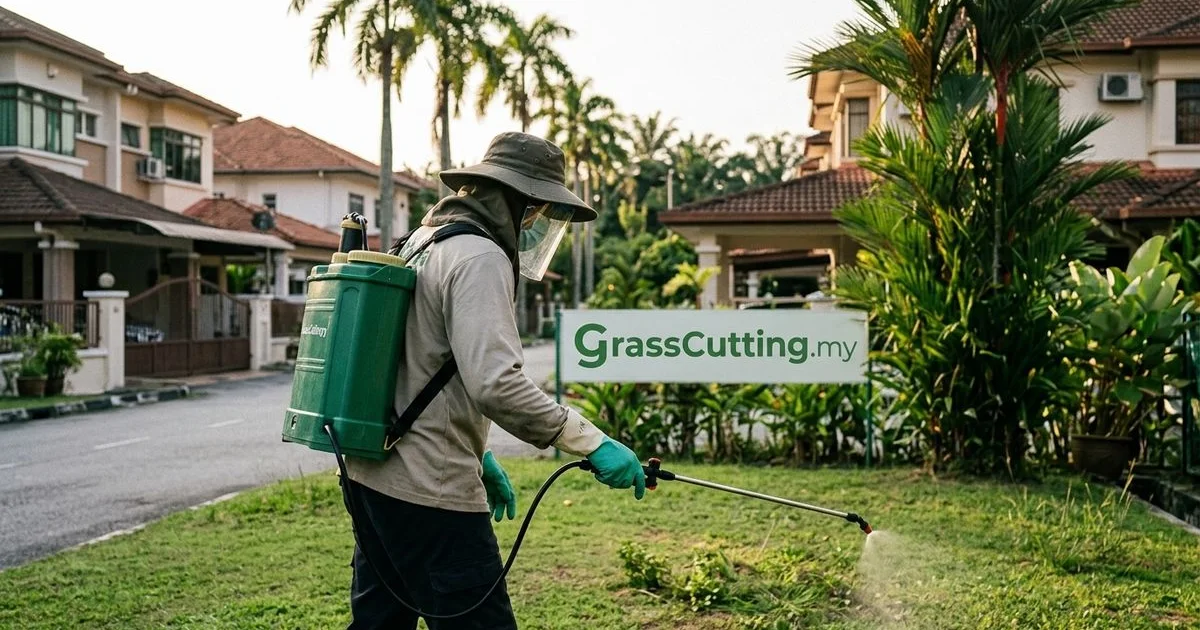
We frequently speak with Damansara homeowners who feel overwhelmed by aggressive lawn weeds. This constant battle is a direct result of our year-round 32°C heat and high humidity.
Such ideal growing conditions allow invasive plants to multiply rapidly.
Our team at GrassCutting.my, founded by Roashan in 2018, provides specialized selective herbicide spraying in Malaysia to combat this exact issue. A typical off-the-shelf “racun” treatment often destroys the turf right alongside the target plant. Let’s break down the science behind targeted elimination and outline a practical action plan for your garden.
What Is the Difference Between Selective and Non-Selective Herbicide?
Selective formulas target specific botanical families, whereas non-selective chemicals destroy any plant they touch. Most people picturing a standard “racun” treatment immediately think of total weedkillers sold in local hardware shops. Those bottles containing active ingredients like Glyphosate are completely non-selective. They act rapidly and do not discriminate between species. This means a non-selective spray will kill your prized lawn right alongside the unwanted weeds.
Our weed management protocol relies heavily on targeted chemistry instead. Selective racun spray is the foundation of our weed control service. These specialized formulas act on specific plant types by binding to unique cellular receptors. Unwanted intruders absorb the compound, but standard residential turfs do not process the chemical in the same way.
Weeds die while your lawn survives and thrives.
| Feature | Selective Herbicide | Non-Selective Herbicide |
|---|---|---|
| Primary Use | Targeting specific weeds in residential lawns | Clearing vacant lots or concrete cracks |
| Common Active Ingredients | Metsulfuron-methyl (e.g., Almix 20WP) | Glyphosate (e.g., Roundup) |
| Turf Impact | Safe for Carpet Grass and Pearl Grass | Kills all grass types instantly |
| Typical Results | Targeted wilting within 1-2 weeks | Total vegetation death in a few days |
How Does Selective Herbicide Work?
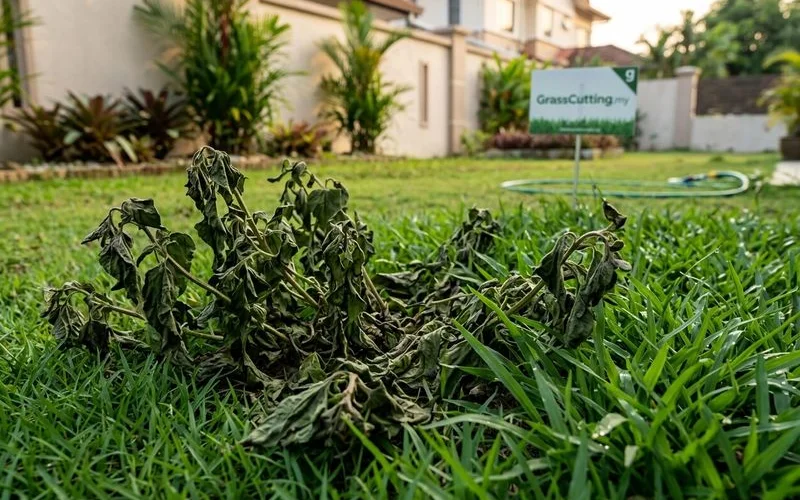
Systemic herbicides absorb through the foliage and travel down into the root system for a complete kill. This biological translocation is crucial for long-term residential lawn care. Surface contact killers only damage the exposed leaves above the soil.
The underlying root structures remain perfectly intact and simply regenerate new growth within a few weeks. Systemic action requires patience, taking about one to two weeks to show visible wilting, but the final outcome is permanent.
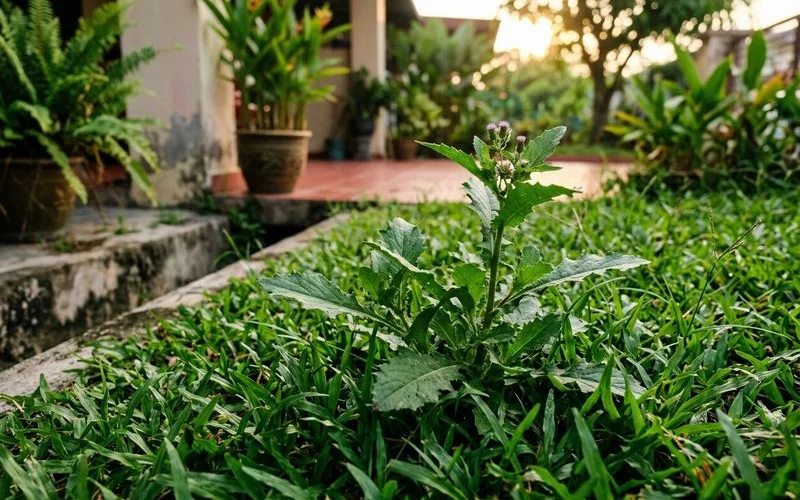
We handle aggressive local species by attacking them at the source. For invasive plants like lalang (Imperata cylindrica), which spread via deep underground rhizomes, systemic eradication is the only proven method. Routine mowing merely chops off the visible tips without addressing the core problem. A quick pass with a string trimmer allows the rhizomes to survive and multiply beneath your carpet grass.
Common Targets for Systemic Treatment in Malaysia:
- Lalang (Imperata cylindrica): Spreads through deep rhizomes that resist manual pulling.
- Touch-me-not (Mimosa pudica): A thorny, creeping broadleaf weed that quickly chokes out pearl grass.
- Creeping Oxalis: Forms dense mats that steal nutrients from the primary lawn.
- Spiny Pigweed: Features deep taproots that require chemical translocation to fully destroy.
Our field experience shows that simple contact sprays just scorch the top layers. Deep systemic absorption is necessary to suppress those stubborn root networks properly. This fundamental biological difference is exactly why our lalang elimination guide strongly emphasises chemical treatment over manual cutting. Recent 2026 agricultural surveys in the Klang Valley confirm that broadleaf weeds like creeping oxalis require this exact same systemic approach.
What Does the Spraying Process Look Like?
A trained technician maps out the affected zones and applies a precisely diluted chemical mixture using a calibrated knapsack pressure sprayer. We carefully adjust the specific chemical ratios based on your exact lawn grass species and the dominant weed types present. This targeted approach prevents unnecessary chemical runoff into your soil.
Full personal protective equipment is mandatory for every job. This standard gear includes heavy-duty gloves, eye protection, respirator masks, and long sleeves. Moving systematically across the turf ensures complete coverage without dangerous overspraying onto your ornamental garden plants. We monitor wind speeds closely, especially during the typical 32°C afternoon heat in the Klang Valley, to prevent harmful drift.
Standard Application Protocol
Proper execution separates a professional job from a hazardous amateur attempt. A strict operational checklist guides every residential property visit.
- Turf Assessment: Identifying the invasive species and confirming the primary grass type.
- Mixture Calibration: Preparing the exact dilution ratio of products like Metsulfuron-methyl using a trusted lawn weed killer malaysia.
- Controlled Application: Applying the solution through a low-pressure knapsack sprayer to minimize drift.
- Drying Period: Mandating a strict isolation window until the treated foliage dries completely.
Homeowners only need to follow a few straightforward safety rules. Keep children and family pets completely off the treated grass until the solution dries completely. You must also observe the required chemical re-entry period for maximum safety. The comprehensive safety guide covers all re-entry timing details thoroughly.
When Is Selective Spraying the Right Call?
Chemical intervention is the correct choice when manual removal fails to stop aggressive regrowth or when invasive roots threaten the main turf. Homeowners in older Petaling Jaya suburbs often inherit deep-rooted weed networks that require serious systemic suppression. Constant string trimming simply cannot kill an established weed patch.
Our scheduled maintenance programmes highly recommend targeted sprays for three specific scenarios.
- Stubborn Broadleaf Infestations: Creeping patches that multiply rapidly after standard cuts.
- Boundary Lalang: Deeply entrenched rhizomes growing along concrete fences or scattered within the yard.
- Overwhelming Growth: Situations where the invasive species spread faster than your bi-weekly mowing schedule can handle.
Correct chemical application delivers the necessary root-level suppression for these problems. Heavy-duty brush cutting remains the superior method for completely overgrown, vacant lots. Manual weeding is the only option if a family strongly prefers a 100% chemical-free garden environment. Our site assessment process will always determine the safest and most effective strategy for your specific landscape.
Conclusion
Protecting your property investment requires a clear plan and the right professional help. We encourage homeowners to skip the trial-and-error phase with hardware store chemicals. A thriving carpet grass lawn provides the perfect backdrop for outdoor family living.
Reach out to GrassCutting.my today to schedule your assessment and reclaim your yard from invasive weeds.
Frequently Asked Questions
What does selective herbicide mean?
It targets specific plant types — broadleaf weeds and lalang — while sparing lawn grasses like carpet and pearl grass. Non-selective (total) herbicides kill everything they touch.
Will racun kill my whole lawn?
No, not if it's selective racun. We confirm your lawn grass type during the assessment and use a formulation that acts on the weeds while leaving your lawn intact.
How long until weeds die?
Most weeds wilt within a few days and die over 1-2 weeks. Stubborn lalang may need a repeat treatment for full root suppression.