Landlord & Developer Duties for Overgrown Vacant Land
Owners and developers are expected to keep vacant land tidy. Learn council expectations, fire/pest/snake risks, and recommended schedules.
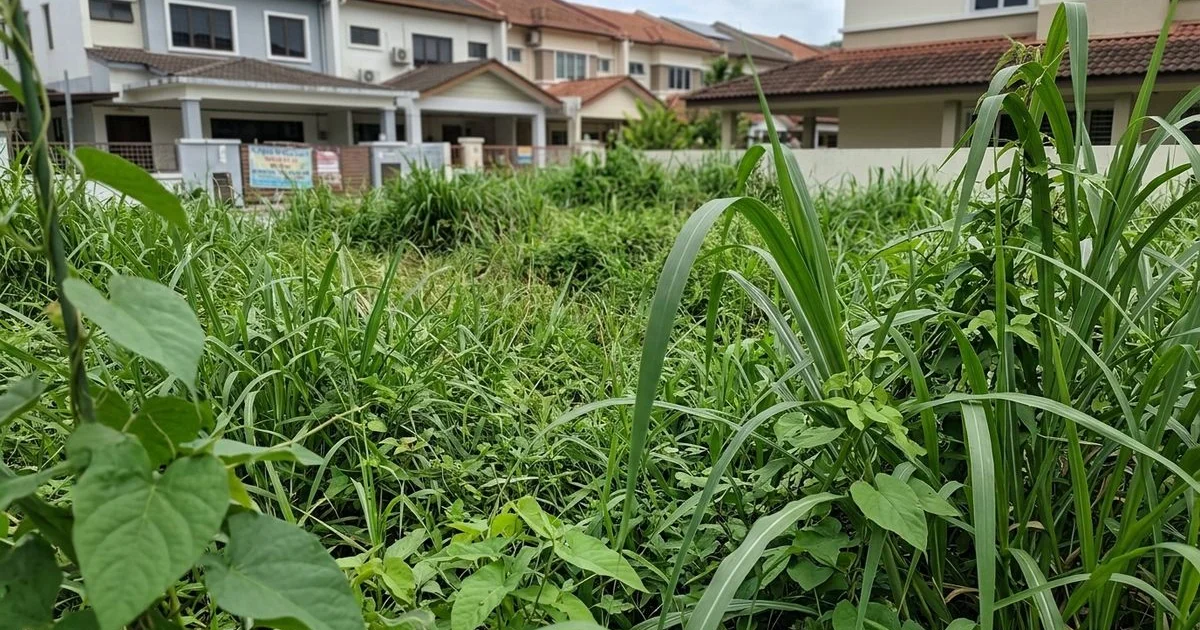
You know how quickly lalang takes over a plot after a few heavy monsoon rains in Petaling Jaya. Managing your overgrown vacant land responsibility becomes an immediate problem for the whole street when that rapid growth hits. We see this exact scenario play out constantly across the Klang Valley.
A clear understanding of the law protects you from steep council fines.
Let’s look at the specific council regulations, the real environmental risks, and the practical schedules you need to follow. Our team set up our vacant land service to handle this exact type of ongoing maintenance. This guide shares the exact methods that work best locally.
What Owners and Developers Are Expected to Do About Overgrown Vacant Land Responsibility
Vacant land in Selangor does not get a free pass just because no one lives on it. Local councils expect landowners to keep their properties tidy and safe at all times. MBPJ across most of PJ, MBSJ for Subang, MBSA for Shah Alam, and DBKL for the KL fringe all actively enforce these rules.
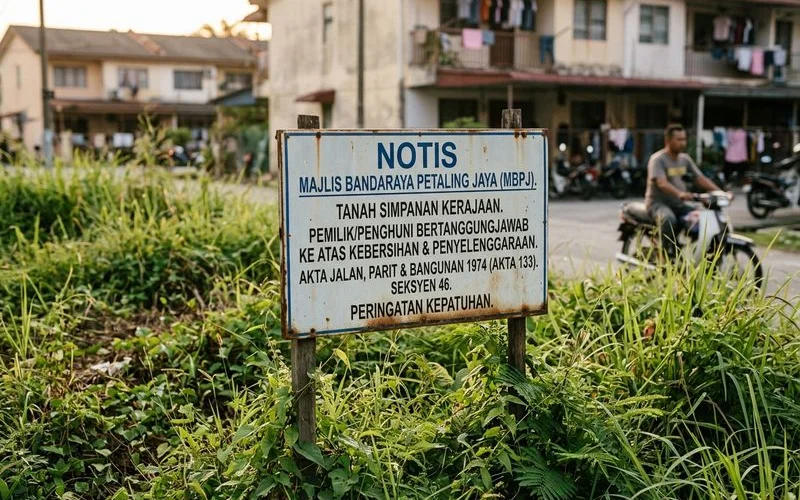
When overgrown land creates pest or fire problems for neighbouring homes, councils definitely act on complaints. Officers usually issue a formal council notice for overgrown land under Section 82 of the Local Government Act 1976. This official document gives the owner a strict deadline to clear the vegetation.
Ignoring this official notice is a costly mistake. You face fines of up to RM1,000 under Section 74 of the same Act. The council can even clear the plot themselves and bill you for the heavy machinery costs.
Here are the typical triggers for a council inspection:
- Direct complaints from immediate neighbours.
- Routine patrols by the local health department.
- A recent spike in dengue cases in the postcode.
- Visible debris spilling onto public roads or drains.
The Real Risks
Beyond the immediate council fines, neglected vegetation carries serious environmental risks that escalate quickly over time. These thick bushes create a perfect storm of hazards for the surrounding community.
Pest and Snake Habitat
Tall lalang provides exactly the shelter that reptiles need during the daytime heat. The reticulated python is now the most common snake caught in Selangor residential drains, and neglected PJ lots are the primary source of these complaints. The overgrown grass health risks guide covers the full picture.
Severe Dengue Penalties
Stagnant water hidden under thick brush is a prime breeding ground for Aedes mosquitoes. Health inspectors use the Destruction of Disease-Bearing Insects Act 1975 to issue massive penalties. You could face a fine of up to RM10,000 if officers find mosquito larvae on your neglected plot.
Fire Risk in the Dry Season
Tall dried grass is highly flammable, meaning stubble fires happen every single dry season in Selangor. These fires start accidentally from discarded cigarettes or controlled burn-offs that get out of hand. Adjacent properties face severe smoke damage or direct fire threats.
Recommended Periodic Schedules
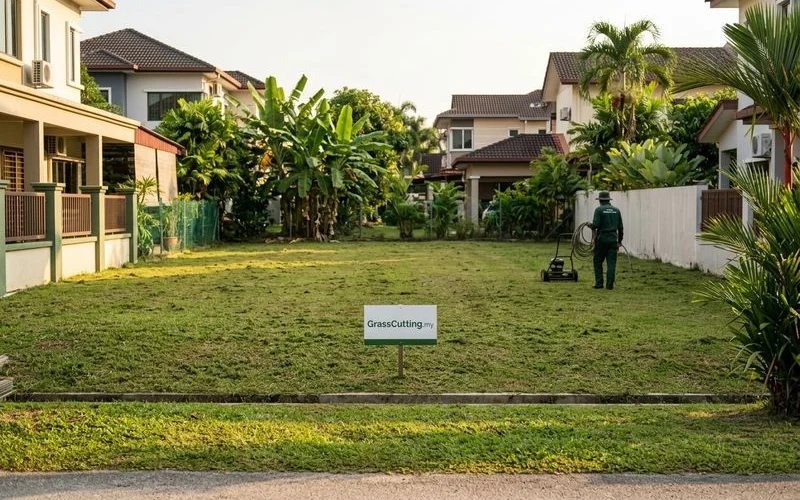
For most vacant lots in PJ and the wider Klang Valley, a consistent clearing rhythm keeps the property manageable, and our guide on lalang clearing for empty lots and side reserves explains what each visit covers. We generally recommend a three to four-month interval during the typical growing season.
The exact timing depends entirely on your lot size, sun exposure, and historical lalang aggression. Heavy rains during the monsoon season between November and January often force owners to shorten this interval.
| Lot Situation | Recommended Interval |
|---|---|
| Small residential vacant lot (under 5,000 sqft) | Every 3-4 months |
| Larger lot in active regrowth area | Every 2-3 months |
| Lot already treated with systemic spray | Every 4-6 months |
| Side reserve adjacent to maintained homes | Every 2-3 months |
We set up rotating clearing schedules across multiple lots for owners and developers managing large portfolios. This coordinated approach prevents sudden crises and keeps compliance costs predictable.
When to Combine Clearing With Spraying
Clearing alone simply tops the lalang off but rarely kills the root system. You will see rapid regrowth on lots with established rhizome networks.
Combining mechanical clearing with selective herbicide spraying extends the time between maintenance visits significantly. Our teams often use systemic treatments like Glyphosate to specifically target the deep roots of Imperata cylindrica, the scientific name for lalang.
Here are the main advantages of this combined approach:
- Destroys the underground root network completely.
- Reduces the total number of yearly maintenance visits.
- Keeps the lot looking tidy for several extra months.
- Prevents invasive weeds from spreading to neighbouring gardens.
The first round of clearing, spraying, and monitoring requires a higher initial investment than a basic cut. That said, this method usually works out much cheaper across a 12 to 18-month period than paying for four standalone clearings. It makes excellent financial sense for larger lots where the heavy machinery transport is itself a massive cost.
How to Get Started
For owners or developers managing land in Petaling Jaya, Damansara, Subang, USJ, Shah Alam, or our other coverage areas, the first step is a site assessment. We confirm the exact square footage, equipment access points, current regrowth condition, and green waste disposal logistics directly on the ground. A clear photograph of the current state helps speed up the initial review.
Here is what you can expect during our first visit:
- A thorough perimeter check for illegal dumping.
- Identification of boundary markers or fences.
- An assessment of local drainage blockages.
- A firm quote for one-time or ongoing maintenance.
Message us with a brief portfolio overview if you are an agency or property manager handling multiple lots. We will quickly return a coordinated proposal that aligns with your specific vacant land owner duties in Malaysia. Proper management of your overgrown vacant land responsibility starts with a simple conversation, so reach out today to get your property compliant.
Frequently Asked Questions
Is a landowner responsible for clearing overgrown land?
Yes, generally. Owners are expected to keep land tidy and safe, and councils (MBPJ, MBSJ, MBSA) may act on complaints. Specific obligations vary by local authority.
How often should vacant land be cleared?
Periodic clearing every 3-4 months keeps lalang and pests under control in the growing season. The exact interval depends on the lot's size, exposure, and how aggressive the regrowth is.
Can council fine me for overgrown land?
Local authorities can issue notices and follow-up enforcement for unmaintained land that creates a public nuisance or hazard. Specifics vary by council and circumstance.